
How a simple charcoal stove in Aminabad evolved into a living culinary institution of Lucknow.
From our late founder to the brothers managing our legacy kitchens today.
Prices Have Changed, but the Taste Is Still the Same
About 150 years ago, this journey that began in the year 1902 continues even today. The late Shri Aladdin Qureshi and his son Haji Wahid Ali Qureshi established Wahid Biryani under the name Wahid Biryani in 1943. Haji Wahid was the only son of the family, therefore he was named Wahid. His father Shri Aladdin Qureshi was from the Bade Sahab Quresh family and was the cook of the Nawab-e-Awadh.
After the Nawabi era ended, people started doing their own work and business, slavery ended, princely states etc. ended, and when the late Aladdin grew weak, he told his recipe, that is the potli masala, to his son Wahid Sahab. Wahid Sahab, taking on all his responsibilities, made his firm under the name Wahid Biryani (in the year 1955), in which Wahid Sahab's maternal uncle, the respected Majeed Sahab, taught him the work and helped Wahid Sahab by giving his important contribution, whose journey starting from Nakhas Chidiya Bazaar, Sadar Racecourse and Chowk Sabzi Mandi in the year 1978, reached Nazirabad in the year 1980, and Aminabad on Naaz Cinema Road in the year 1995, which exists even today.
In fact, Wahid Biryani began at one anna per plate. Wahid Sahab tells a story from his time that I was selling biryani in the market, a gentleman ate our biryani and asked our name and address. I felt that the gentleman did not like the biryani. I told him, do not give me money. Then he said that I liked your biryani very much. I will definitely write about it in my magazine. Its picture was printed 60 years ago in a magazine named Dharmyug, whose headline was - Prices have changed, but the taste is the same.
Wahid Sahab, telling his story, said that now due to age I have also become weak. Now Abid Ali Qureshi looks after my work and I have given all the responsibility to him.
Abid Ali Qureshi is handling all the responsibilities very well and has made Wahid Biryani a multi-cuisine restaurant, which is available in both vegetarian and non-vegetarian forms. He is invited to all the food festivals held across India.
He started with chicken-mutton biryani and now this journey has moved ahead and will continue ahead too. At present, the firm is in the hands of the fourth generation, who will take care of this work and maintain its existence in the country and abroad. Wahid Sahab's young grandsons Aakib Qureshi, Saakib Qureshi, Arbaaz Qureshi and Mohammad Saad Qureshi are now taking this work ahead with the new times, new times and new technology. They will keep moving ahead with the guidance and blessings of their grandfather and their father.
"We do not cut corners. The spices are ground by hand, the meat is double-marinated, and every handi is sealed with dough. It is our promise to Lucknow."
1955 — The Pioneer of Aminabad Biryani
The Custodian & Master Blender of Recipes
Carrying the Flame & Kitchen Ethos Today
The core values, authentic ingredients, and time-honored cooking principles that define our legacy.
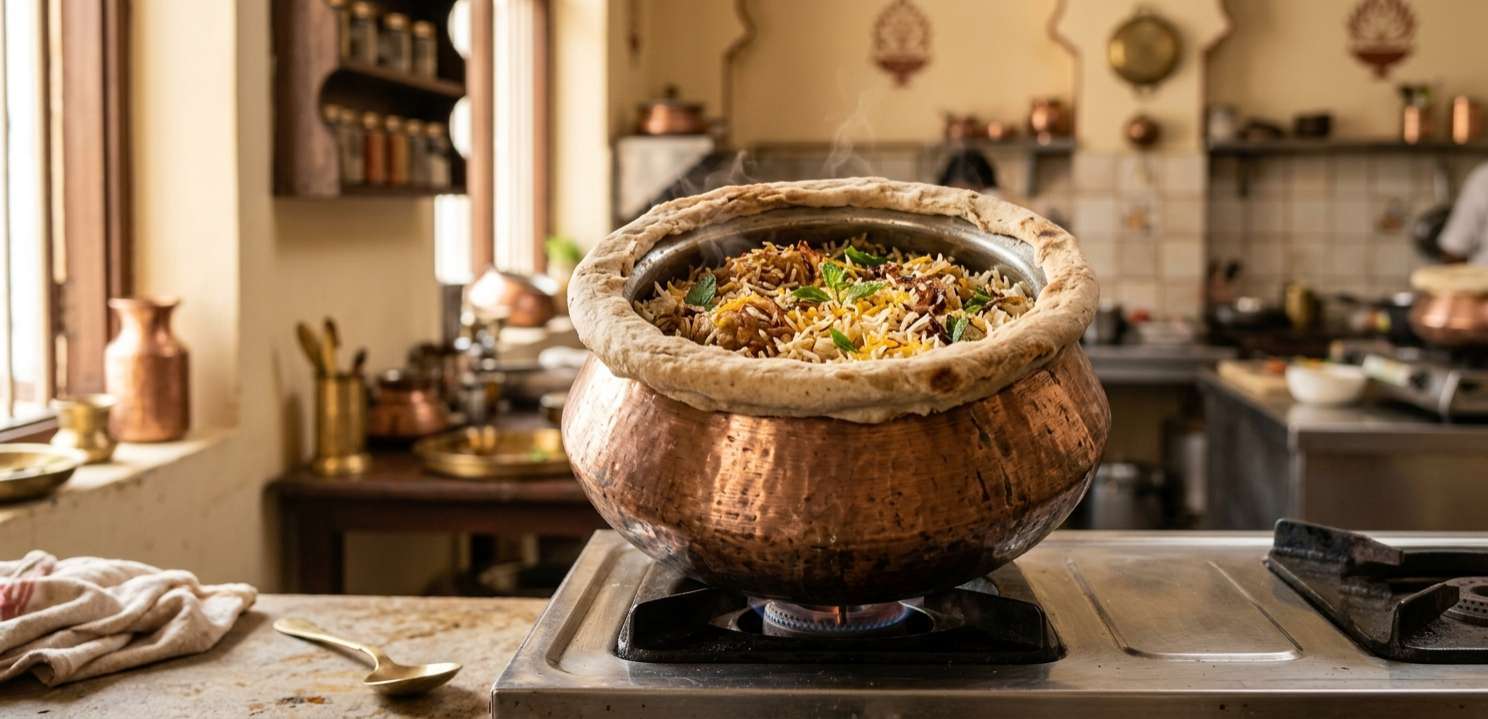
The secret of our biryani lies in authentic ' Dum-Pukht'—sealing the copper degh with kneaded dough to slow-cook ingredients in their own steam, locking in rich herbal aromas.

We strictly cook in heavy brass and tin-coated copper handis (Kalai). These traditional metals distribute heat gently, ensuring the meat achieves melt-in-mouth tenderness.
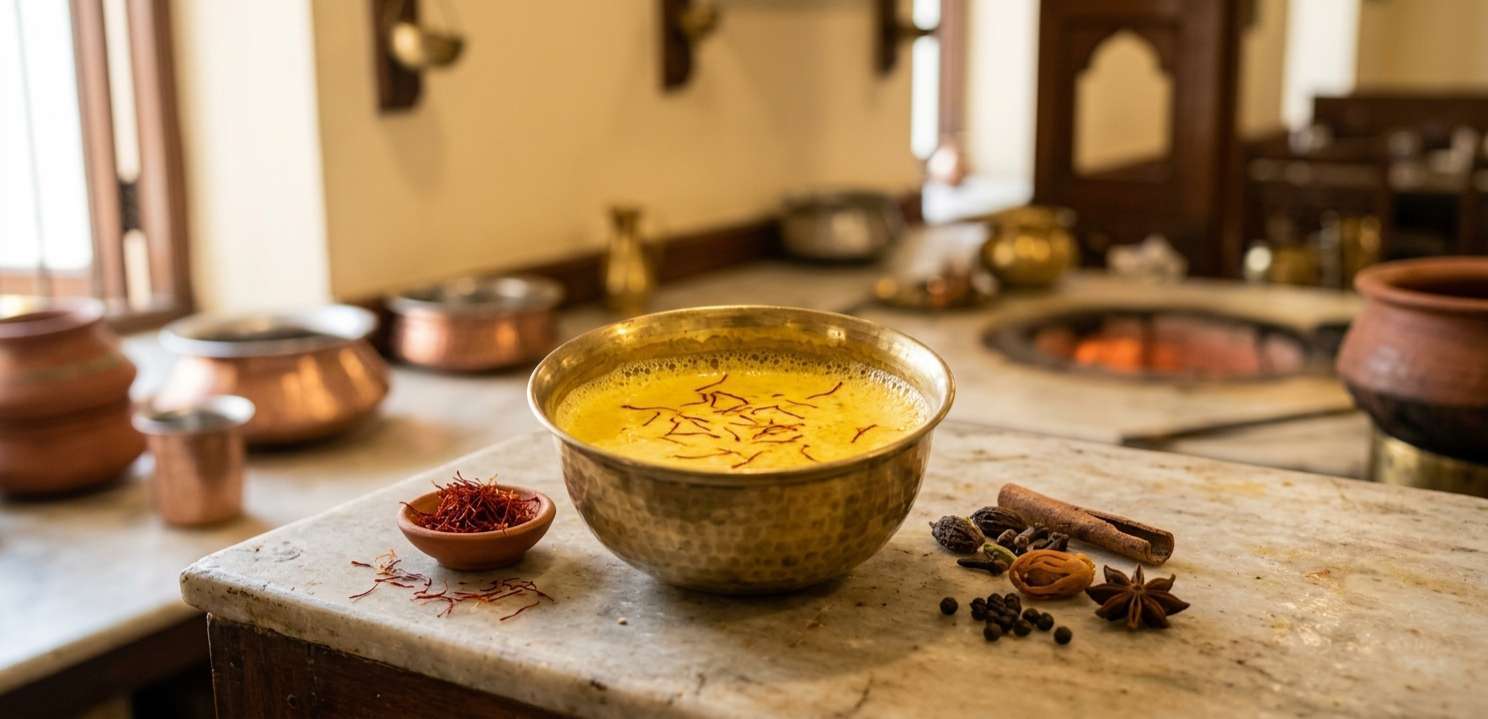
True Lucknowi biryani uses no artificial dyes. We layer our aged rice grains with hand-extracted Kashmiri saffron warm milk to create subtle gold hues and delicate floral notes.

Our legacy spice recipe, composed of 32 hand-ground whole botanicals, is preserved as a closely-guarded family archive passed down directly across three generations.
Pan-seared on inverted heavy copper griddles to achieve paper-thin, soft layered breads crafted to complement melt-in-mouth Galavati kababs perfectly.
Prime cuts skewered and roasted on open charcoal sigris with pure ghee brushing for genuine Awadhi smokiness.
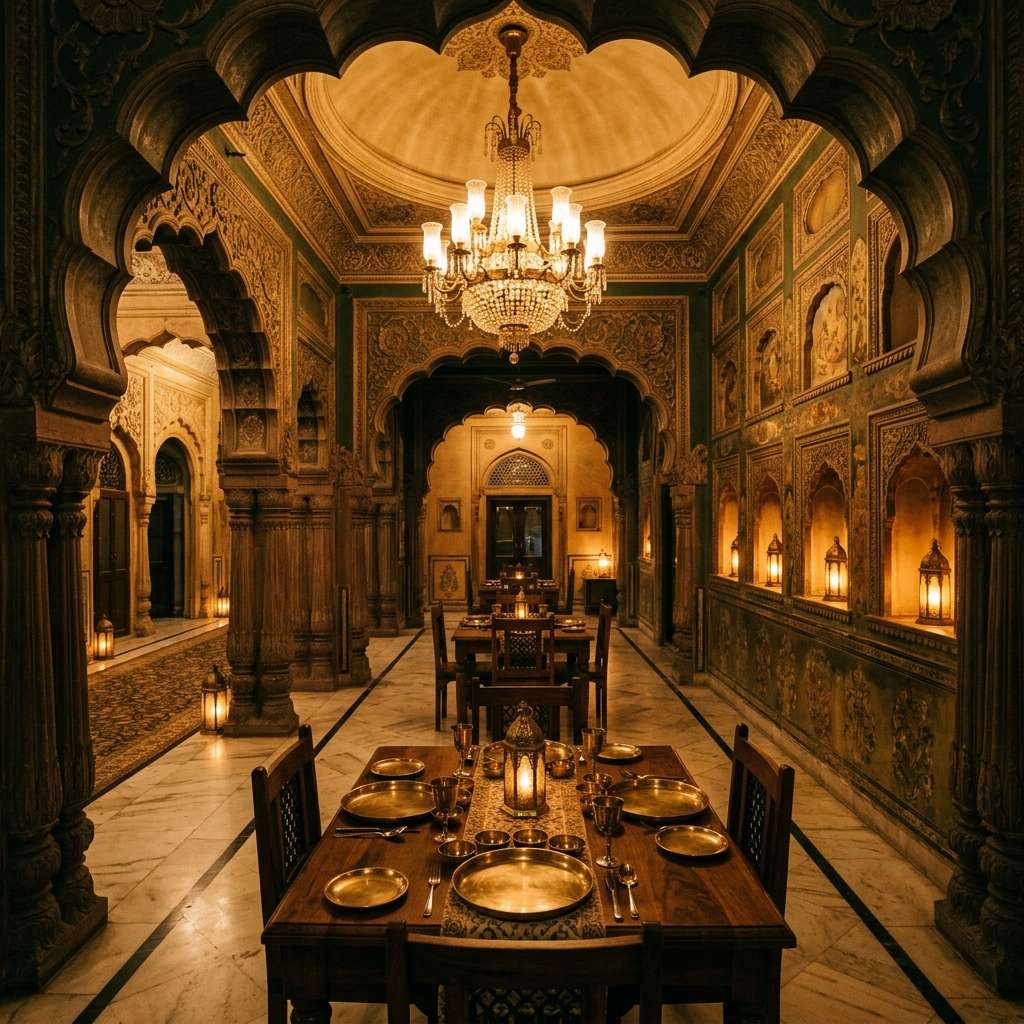
At Wahid Biryani, we don't just serve food; we serve an era. Rooted in the legendary culture of Lucknow, our hospitality is an extension of the Awadhi Tehzeeb—a refined etiquette where every guest is welcomed as an honored nawab.
From the careful folding of the dastarkhwan to the polite 'Pehle Aap' (after you) tradition, we bring the soulful warmth of the Nawabs directly to your dining experience.
"A taste that belongs to Lucknow, an experience that belongs to you."

Just as the magnificent Rumi Darwaza and the grand Bada Imambara stand as the architectural soul of this city, Wahid Biryani has stood as its culinary monument since 1955.
For over seven decades, our handis in Aminabad have mirrored the grandeur of Nawabi structures—steeped in history, crafted with immense patience, and carrying the true, famous essence of Awadh. To taste our biryani is to walk the royal, spice-scented corridors of ancient Lucknow.